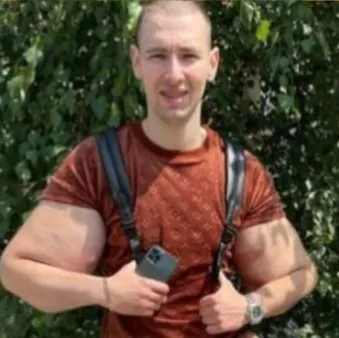
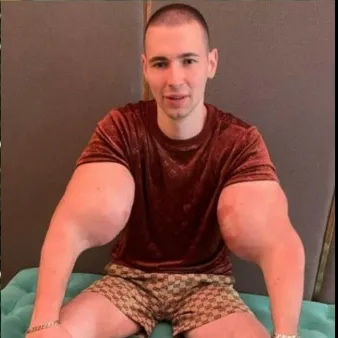
They called him Popeye, and for a long time, the nickname was meant to amuse. Photos of his grotesquely swollen arms spread across the internet, shared for shock value, laughter, and disbelief. Kirill Tereshin became a viral spectacle, a walking meme fueled by curiosity and ridicule. Few people stopped to ask what would happen when the attention faded and the damage remained.
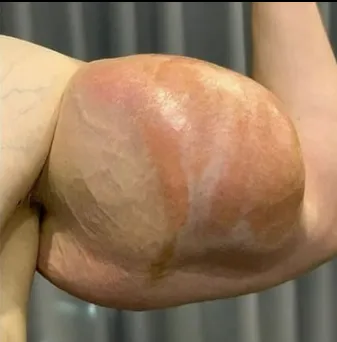
For years, Kirill injected dangerous substances into his biceps, chasing an extreme look that defied anatomy and common sense. The chemicals hardened inside his arms, distorting muscle and tissue beyond repair. What began as a stunt meant to draw clicks and followers slowly turned into a medical nightmare. The body, unlike the internet, does not forget.
Kirill’s rise to notoriety followed a familiar path in the age of viral fame. Attention came quickly, and with it came validation, comments, and recognition from strangers across the world. Each reaction encouraged the next injection, the next post, the next escalation. Fame, even negative fame, can be addictive when it fills a void.
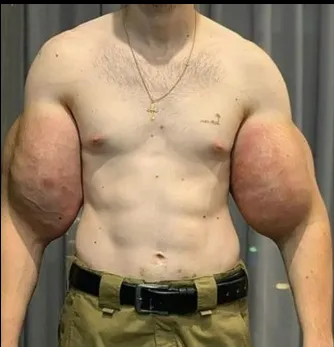
Over time, the laughter grew louder, but the warnings did too. Doctors cautioned Kirill repeatedly about the irreversible damage he was causing to his body. Infections formed, tissue hardened, and circulation became compromised. The arms that once brought attention were now quietly becoming a threat to his life.
Now, Kirill faces a reality no one would ever want. Medical professionals warn that the damage inside his arms is spreading, and the condition has become extremely serious. Some reports indicate he could lose both arms if the infection continues unchecked. The same body parts that made him famous may soon cost him everything.
Kirill insists he is still holding on. He has undergone extensive testing and is preparing for surgery in hopes of saving his arms. The procedures are complex, and the outcome remains uncertain. This is no longer about appearance, but survival.
What makes Kirill’s story uncomfortable is not just the extremity of his choices, but how familiar the pattern feels. The internet rewards shock, exaggeration, and spectacle without concern for long-term consequences. A moment of attention can outweigh years of health in a culture obsessed with visibility. Kirill became a case study in how far someone might go to feel seen.
It is easy to judge his decisions from a distance. Many people mocked him, turning his image into a joke without considering the human being underneath. But standing where he is now, judgment feels hollow. Consequences have arrived whether anyone approves or not.
Behind the headlines is a man confronting pain, fear, and regret. The arms he once displayed proudly now require constant medical supervision. Everyday tasks have become difficult, and the future is uncertain. Viral fame offered no protection when the body began to fail.
Kirill’s condition serves as a stark reminder that the body has limits no filter or algorithm can override. Damage done beneath the skin does not disappear when the comments stop. Infections do not care how many people are watching. Biology always has the final say.
There is something deeply human about wanting to be noticed. Kirill’s choices were extreme, but the desire that drove them is not unique. In a world that measures worth through likes, shares, and reactions, it is easy to confuse attention with value. That confusion can be dangerous.
Now, Kirill’s story has shifted from spectacle to cautionary tale. It is no longer about how large his arms appear, but about whether they can be saved at all. The internet that once laughed has largely moved on, leaving him to face the consequences in real time. Fame, it turns out, has a very short memory.
Doctors continue to monitor his condition, weighing difficult decisions with serious risks. Surgery may help, but there are no guarantees. Each day brings new uncertainty and difficult conversations. The bravado that once fueled his persona has been replaced by vulnerability.
No matter what people think of Kirill’s past choices, this moment deserves empathy. He is no longer chasing shock value or viral relevance. He is fighting for his body, his independence, and his future. That fight is deeply personal and profoundly real.
His story stands as a warning that shortcuts to attention often come with long-term consequences. The scars left behind are not always visible on a screen. They live in the body, in pain, and in irreversible damage. Some lessons arrive too late to undo.
Kirill Tereshin wanted bigger arms, but what he truly wanted was to matter. Now, faced with the possibility of losing both arms, he is learning a harder truth. Worth is never measured in size, likes, or shock value. It is measured in how we care for the life and body we have been given.
Heartbreaking moment: ‘Healthy’ young man loses both legs to sepsis just days before his 21st birthday.ly216
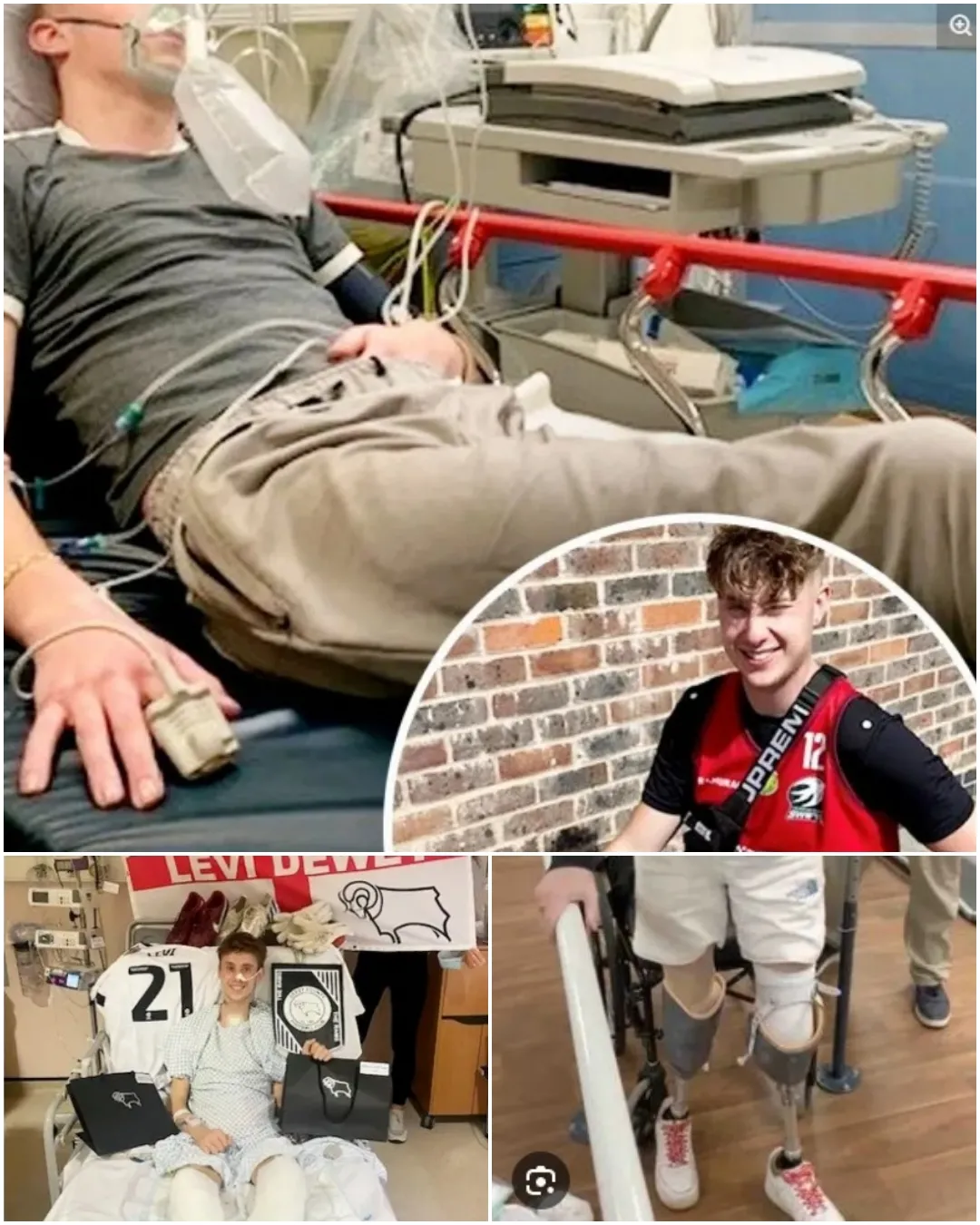
A “fit and healthy” 20-year-old man was forced to undergo double leg amputation just days before his 21st birthday after what began as flu-like symptoms were diagnosed as sepsis.
Levi Dewey was placed in an induced coma and faced only a 30% chance of survival after the life-threatening condition took hold.
Previously active and a keen football player, Levi initially fell ill with flu-like symptoms and tried to manage them with over-the-counter medications.